
Nawwall Arrofaha,
Henti H. Rachmat,
Andi Salamah  ,
Fifi G. Dwiyanti,
Iskandar Z. Siregar,
Oliver Gailing,
Koichi Kamiya
,
Fifi G. Dwiyanti,
Iskandar Z. Siregar,
Oliver Gailing,
Koichi Kamiya
What transformation is needed in Indonesia's Dipterocarpaceae research to contribute to global tropical forestry?
Arrofaha N., Rachmat H. H., Salamah A., Dwiyanti F. G., Siregar I. Z., Gailing O., Kamiya K. (2026). What transformation is needed in Indonesia's Dipterocarpaceae research to contribute to global tropical forestry? Silva Fennica vol. 60 no. 2 article id 25062. https://doi.org/10.14214/sf.25062
Highlights
- Indonesia is among the countries with the highest Dipterocarp biodiversity
- Global studies form two main clusters related to the ecological and phytochemical aspects
- Global and Indonesian molecular research focuses on commercially important species
- Research in Indonesia is progressing more slowly than global trends, and its domestic research network remains fragmented.
Abstract
The Dipterocarpaceae family comprises the dominant tree species of Southeast Asia’s rainforests, with their centre of diversity in Borneo (Kalimantan) and Sumatra, Indonesia. Despite considerable molecular research on dipterocarps, a comprehensive mapping of the research foci remains lacking. This study aims to identify research priorities, existing gaps, and methodological trends in Dipterocarpaceae studies within Indonesia to inform future research efforts, shape policy directions, and contribute to global sustainable forest management. Through two distinct searches in the Scopus database, 1174 articles were retrieved for bibliometric analysis, and 94 molecular and genetic research articles were selected according to specific keywords and criteria. Bibliometric and thematic analyses revealed two primary clusters within global studies of Dipterocarpaceae: ecology, forestry, and conservation; and phytochemistry and pharmaceutical applications. However, genetic research is primarily focused on species of notable commercial significance, specifically Rubroshorea leprosula (Miq.) P.S.Ashton & J.Heck. and Rubroshorea parvifolia (Dyer) P.S.Ashton & J.Heck. Notably, molecular and genetic research on Dipterocarpaceae in Indonesia is approximately two decades behind prevailing global trends. The current focus of molecular research in Indonesia is directed towards genetic diversity and population structure, with strong international collaborations but fragmented national networks, highlighting the need to diversify themes and strengthen partnerships. Furthermore, studies on endemic and threatened species are scarce. The findings of this study emphasize the critical need to strengthen national research capacity, advance technological development, and foster both domestic and international collaborations to address these significant knowledge gaps in the global conservation of Dipterocarpaceae.
Keywords
bibliometric analysis;
genetic;
global;
Indonesia;
molecular
-
Arrofaha,
Department of Biology, Faculty of Mathematics and Natural Sciences, Universitas Indonesia, Jl. Prof. Dr. Mahar Mardjono Kampus Universitas Indonesia Depok, Depok 16424, Indonesia
 https://orcid.org/0009-0002-8067-9182
E-mail
nawwall.arrofaha@ui.ac.id
https://orcid.org/0009-0002-8067-9182
E-mail
nawwall.arrofaha@ui.ac.id
-
Rachmat,
Research Centre for Ecology, National Research and Innovation Agency, Jl. Raya Jakarta-Bogor Km 46, Cibinong, Bogor, West Java 16911, Indonesia
https://orcid.org/0000-0003-4586-6820
E-mail
hent003@brin.go.id
-
Salamah,
Department of Biology, Faculty of Mathematics and Natural Sciences, Universitas Indonesia, Jl. Prof. Dr. Mahar Mardjono Kampus Universitas Indonesia Depok, Depok 16424, Indonesia
https://orcid.org/0000-0002-4074-8342
E-mail
salamah@sci.ui.ac.id
-
Dwiyanti,
Department of Silviculture, Faculty of Forestry and Environment, IPB University, Academic Ring Road Campus IPB Dramaga, Bogor, West Java 16680, Indonesia
https://orcid.org/0000-0003-0366-3259
E-mail
fifi_dwiyanti@apps.ipb.ac.id
-
Siregar,
Department of Silviculture, Faculty of Forestry and Environment, IPB University, Academic Ring Road Campus IPB Dramaga, Bogor, West Java 16680, Indonesia
https://orcid.org/0000-0002-5419-482X
E-mail
siregar@apps.ipb.ac.id
-
Gailing,
Department of Forest Genetics and Forest Tree Breeding, Georg-August-Universität Göttingen, Büsgenweg 2, 37077 Göttingen, Germany
https://orcid.org/0000-0002-4572-2408
E-mail
ogailin@gwdg.de
-
Kamiya,
Graduate School of Agriculture, Ehime University, 3-5-7 Tarumi, Matsuyama, Ehime, 790-8566, Japan
https://orcid.org/0000-0003-3614-9029
E-mail
kkamiya@agr.ehime-u.ac.jp
Received 28 November 2025 Accepted 27 April 2026 Published 26 May 2026
Views 17236
Available at https://doi.org/10.14214/sf.25062 | Download PDF

1 Introduction
The Dipterocarpaceae family represents a prominent group of evergreen trees, comprising 17 genera, and distributed across four continents (Africa, Asia, Oceania, and South America) (Bartholomew et al. 2021; Sasaki 2006). This family comprises over 500 species globally (Maury-Lechon and Curtet 1998), with most species distributed across the Malesia region. Indonesia represents a significant center of Dipterocarpaceae diversity, hosting around 238 species, approximately 62% of the total species within the region, with more than half classified as endemic (Purwaningsih 2004). In Indonesia, Dipterocarpaceae primarily inhabit lowland rainforests spanning Sumatra, Kalimantan, Java, Sulawesi, Maluku, and Papua (Ashton 1982) and contribute to the formation of the forest canopy, which plays a vital role in ecosystem dynamics (Brearley et al. 2016). Moreover, this family provides habitat for various fauna (Chung et al. 2013; Das et al. 2018; Kettle 2010; Shafie et al. 2023) and supports forest regeneration through mast-fruiting mechanisms (Chong et al. 2016). From an economic perspective, the Dipterocarpaceae family holds considerable importance, accounting for over 85% of Indonesia’s timber exports (Ashton 2004; Maycock et al. 2012) and yielding various economically valuable non-timber forest products (Aslam et al. 2015; Salleh et al. 2020). Despite their significant ecological and economic roles and their designation as a global biodiversity hotspot, the contributions of Indonesian researchers to the scientific advancement of Dipterocarpaceae remain inadequately mapped.
Given the exceptionally high species diversity within the Dipterocarpaceae family, the ability to accurately identify species is a crucial prerequisite for the sustainability of research, conservation, and forest resource management (Margules and Pressey 2000). However, the traditional identification of Dipterocarpaceae species based on morphological characters often faces various challenges (Osathanunkul and Madesis 2021). Many species possess highly similar vegetative characteristics, which complicates their distinction in the field (Mufarhatun et al. 2023), whilst more distinct features are generally found only on reproductive organs such as flowers or fruits, which are not always available during field observations (Osathanunkul and Madesis 2021; Primananda et al. 2024). This challenge is exacerbated by the limited number of specialized taxonomists within this family (Ashton 1982; Hamilton et al. 2019; Osathanunkul and Madesis 2021). In parallel with these identification challenges, Dipterocarpaceae species are increasingly exposed to anthropogenic pressures, including land-use conversion, overexploitation, illegal logging (Appanah et al. 1998; Hayward et al. 2021), and habitat fragmentation (Ghazoul 2016). These disturbances contribute to genetic erosion, population decline, and reduced reproductive success, ultimately threatening the long-term persistence of species and ecosystem stability (Phang et al. 2024). Advances in molecular methodologies, including DNA barcoding and DNA-based phylogenetic analysis, have revolutionized approaches to species identification and the study of plant evolution (Hebert et al. 2003; Hollingsworth et al. 2011). Diverse genetic approaches enhance accuracy in species identification (Jiang et al. 2020), analysis of population structure and genetic diversity, and the reconstruction of evolutionary history through next-generation sequencing (NGS) technology (Cvetković et al. 2019). These approaches also support conservation, forensic applications (Park et al. 2017), and the monitoring of illegal timber trade (Ng et al. 2017), while analyses of genetic diversity and population structure provide insights into species’ adaptive capacity to climate change (Pauls et al. 2013; Schierenbeck 2017). However, the application of molecular techniques in biodiversity research is not universally practiced across countries, underscoring the need to assess how research on Dipterocarpaceae in Indonesia has evolved alongside these methodological developments.
Although research on Dipterocarpaceae has expanded significantly worldwide, the role and nature of Indonesian researchers’ contributions to molecular and genetic research within this scientific landscape remain poorly understood. A key question is whether research on Dipterocarpaceae in Indonesia continues to rely on conventional approaches or has transitioned to the increasingly dominant molecular and genetic approaches seen in tropical biodiversity studies (Sheth and Thaker 2017). Additionally, it is necessary to assess whether the research exhibits thematic biases, such as a focus on specific species, particular research themes, or limited patterns of scientific collaboration (Llorente-Culebras et al. 2023; Tydecks et al. 2018). Therefore, this study aims to assess the current state of Indonesian research on Dipterocarpaceae and identify the necessary transformation to enable it to make a substantial contribution to global tropical forestry. This approach combines bibliometric analysis with an in-depth literature review. The bibliometric analysis quantitatively maps the research landscape, identifying specific research aspects, the most frequently studied species, and scientific collaboration networks, thereby providing a macro-level overview of current research developments (Donthu et al. 2021; Passas 2024). Meanwhile, an in-depth literature review qualitatively evaluates key articles, analyzing research themes, methodological approaches, and scientific implications of the research (Tranfield et al. 2003; Williams et al. 2021). The findings of this study identify research trends, critical gaps, and methodological deviations from international standards, thereby providing a framework for future research priorities.
2 Methods
2.1 Literature search and keywords
The literature search process involved two distinct groups of keyword combinations. The first group comprised keywords including “Dipterocarpaceae”, “dipterocarps”, “Cotylelobium”, “Dipterocarpus”, “Dryobalanops”, “Hopea”, “Parashorea”, “Shorea”, “Vatica”, and “Upuna”, which were employed to locate literature that addresses various aspects of Dipterocarpaceae research on a global scale. The second group of keywords focuses on molecular and genetic approaches and includes terms such as “Dipterocarpaceae”, “dipterocarps”, “Anisoptera”, “Cotylelobium”, “Dipterocarpus”, “Dryobalanops”, “Hopea”, “Parashorea”, “Shorea”, “Vatica”, “Upuna”, as well as “genetic diversity”, “DNA barcoding”, “molecular”, “population genetics”, and “genetic structure”.
2.2 Inclusion and exclusion criteria
A comprehensive set of inclusion and exclusion criteria has been established to ensure the relevance and quality of the studies included in this article. The literature analyzed includes peer-reviewed articles indexed in Scopus, published between 1990 and 2025, that utilize Dipterocarpaceae specimens sourced from Indonesia, pertain to molecular biology, genetics, or related sciences, and are written in either Indonesian or English. Excluded from this review are studies that do not emphasize molecular research, those conducted outside Indonesia (except for comparative purposes), non-peer-reviewed publications, studies limited solely to transcriptomic or metabolomic data, and studies with taxonomic ambiguity in the keywords.
2.3 Study selection and classification process
The study identification process commenced with a literature search in the Scopus database, encompassing the previous two decades (2005–2025). This search identified 1174 articles on global research on Dipterocarpaceae, providing a foundation for analyzing research trends in this family of plants (Section 3.1). To investigate the molecular and genetic research focus on Dipterocarpaceae species (Section 3.2), the trends in molecular and genetic methodologies (Section 3.3), and the patterns of scientific collaboration among institutions and countries regarding studies on Indonesian Dipterocarpaceae (Section 3.4), a systematic study selection process was conducted (Fig. 1).
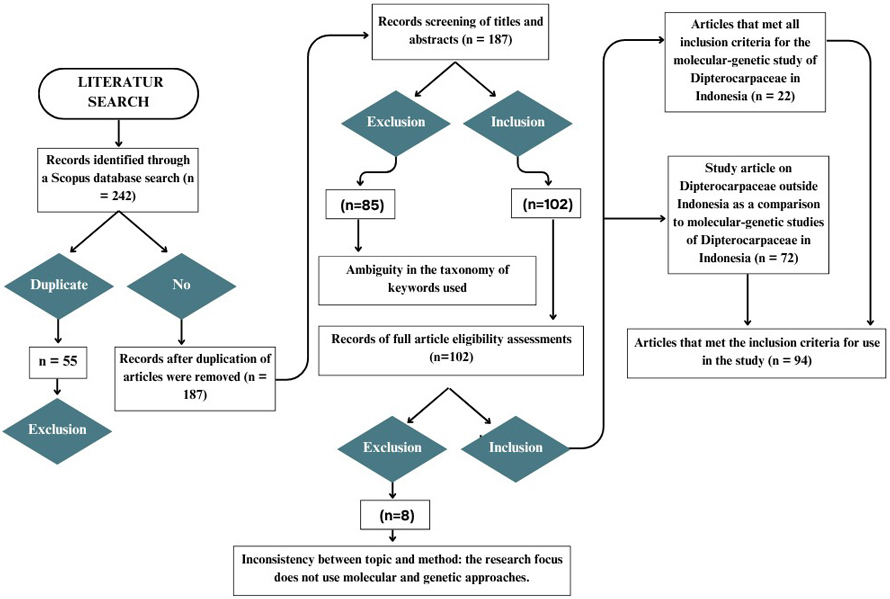
Fig. 1. Flowchart of the literature selection process for molecular and genetic research of Dipterocarpaceae in Indonesia.
Initially, 242 articles addressing molecular and genetic research on Dipterocarpaceae worldwide were retrieved from the Scopus database. After removing 55 duplicate articles, 187 articles remained for the screening phase. During the initial screening, which focused on titles and abstracts, 85 articles were excluded due to taxonomic ambiguity associated with the term “Anisoptera”, which pertains to a suborder of Odonata (insects known as dragonflies) and did not conform to the inclusion criteria. Subsequently, 102 articles were assessed for eligibility and relevance to the study objective, and 8 articles were excluded for not incorporating molecular or genetic approaches. Ultimately, 22 articles that fulfilled all inclusion criteria were selected as the primary dataset for molecular and genetic research on Dipterocarpaceae in Indonesia. An additional 72 articles from other countries were included as comparative data to facilitate analysis of differences between molecular and genetic research on Dipterocarpaceae in Indonesia and investigations conducted in other regions (Fig. 1). In total, 94 molecular and genetic research articles were used in this study (Fig. 1).
A bibliometric analysis of keyword networks was conducted on all 1174 additional articles related to Dipterocarpaceae research using VOSviewer software to identify prevalent research topics related to Dipterocarpaceae (Section 3.1). To examine the molecular and genetic research cluster across various Dipterocarpaceae species (Section 3.2), the literature was classified based on the origin of the species studied. The “Indonesia” category includes studies on Dipterocarpaceae species originating from Indonesia using molecular and genetic approaches, regardless of where the research was conducted. The “Global” category comprises studies on species from other countries, serving as comparative data to assess patterns of species dominance. For the analysis of molecular and genetic methodological trends (Section 3.3), the classification additionally considered the research context. The “Indonesia” category includes studies on Indonesian Dipterocarpaceae conducted within Indonesian laboratories or by authors affiliated with Indonesian institutions, with samples sourced from Indonesia. The “Global” category refers to studies conducted in other countries using similar approaches and serves as comparative data to analyze differences in methodologies, tools, and research gaps.
Molecular methods were classified into three main categories based on the principles of the technology and analytical platform employed, thereby ensuring clarity and visualization of the data. The three categories include: 1) fragment analysis-based methods; 2) direct sequencing-based methods; and 3) Next Generation Sequencing (NGS) methods. The frequency of occurrence of the studied species, along with methodological trends, was analyzed using Microsoft Excel. Co-authorship mapping was performed using VOSviewer to explore scientific collaboration patterns in Dipterocarpaceae research in Indonesia.
The analysis of scientific collaboration patterns among institutions and countries involved in studies of Indonesian Dipterocarpaceae was performed alongside key research themes. Articles were classified based on molecular and genetic research involving Indonesian Dipterocarpaceae species, particularly those conducted through inter-institutional and international collaborations. This approach allowed assessment of the relationship between collaboration patterns and research themes. From the 22 papers analyzed, four major themes were identified: (1) genetic diversity and population structure, (2) phylogeny, taxonomy, and species identification, (3) genetic studies in ecology and forest management, and (4) method development. Papers were classified into four sub-themes based on their primary research objective and analytical focus. In cases of overlap, classification was based on the main research objective.
2.4 Thematic-quantitative and bibliometric analysis using VOSviewer
A bibliometric analysis of keyword networks (all keyword co-occurrence) for all 1174 articles related to Dipterocarpaceae research was conducted using VOSviewer software to identify global research topics related to Dipterocarpaceae. Keyword clustering was generated automatically by VOSviewer based on co-occurrence patterns, without manual assignment, ensuring that the resulting clusters authentically represented the dataset’s structure rather than being influenced by predefined search categories. The analysis encompassed an examination of the frequency of occurrence of the species studied, an evaluation of methodological trends, and a review of research themes that met the inclusion criteria for sub-chapter classification, all conducted in RStudio. The frequency of occurrence of each species was quantified by the number of studies reporting on it. Meanwhile, methodological trends were assessed by calculating the frequency of studies that applied each method, with the results summarised in RStudio. Furthermore, to investigate the scientific collaboration network within Dipterocarpaceae research in Indonesia, a co-authorship mapping analysis was conducted using VOSviewer. This analysis involved assessing the co-occurrence of authors and their institutional affiliations to identify collaboration networks. The quantitative data, which includes species occurrence frequency, methodological trends, and bibliometric mapping, were linked to various study themes in order to elucidate the current status of Dipterocarpaceae research in Indonesia, including research focus, direction, development, and gaps within the field.
3 Results
3.1 Global research aspects on Dipterocarpaceae based on keyword analysis
The visualization of global research on Dipterocarpaceae indicates that this family of trees is a central keyword, reflecting its role as the primary focus of interdisciplinary research connecting two major clusters (Fig. 2). A keyword co-occurrence analysis further reveals two dominant research clusters that have emerged naturally from the dataset, rather than being predefined. The first cluster, marked in red, incorporates various keywords related to genera and species of Dipterocarpaceae, including Hopea, Vatica, Dipterocarpus, Shorea, Dryobalanops aromatica, Rubroshorea leprosula (syn. Shorea leprosula), and Shorea robusta. Furthermore, this cluster encompasses research themes and areas of investigation, including endangered species, forestry, regeneration, biodiversity, conservation, forest management, seedlings, reforestation, trees, timber, tropical forests, the tropics, rainforests, and genetic diversity. This red cluster reflects research on ecology, conservation, and biodiversity, as well as tropical forest management. The emergence of geographical keywords such as Borneo, Malaysia, India, and Asia also indicates the main regions of focus within this domain of study.
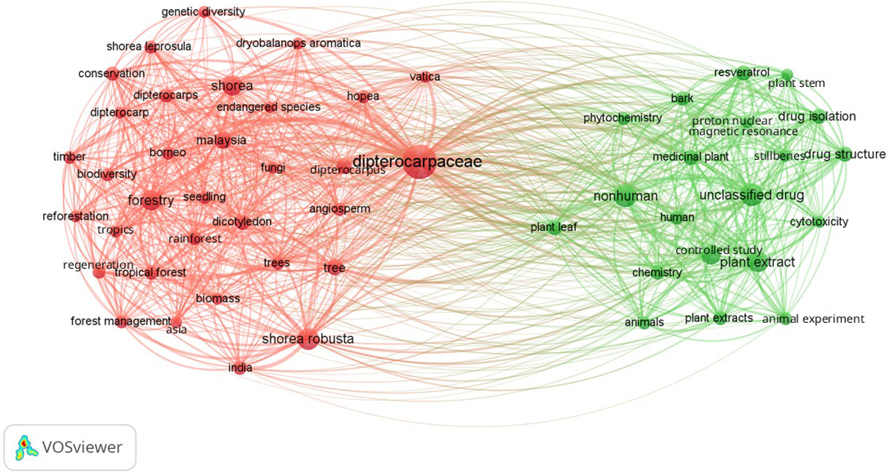
Fig. 2. Bibliometric analysis of global research on Dipterocarpaceae.
The second cluster, denoted in green, consists of keywords including plant leaf, resveratrol, plant stem, bark, phytochemistry, proton nuclear magnetic resonance, drug isolation, unclassified drug, medicinal plant, stilbenes, drug structure, nonhuman, human, cytotoxicity, chemistry, controlled study, plant extracts, animal, and animal experiment. This cluster indicates research focused on phytochemical studies and the biological activity of compounds isolated from various Dipterocarpaceae species. The emphasis is on isolating compounds from different plant parts, such as leaves, stems, and bark, as indicated by the relevant keywords. The simultaneous appearance of the terms “human” and “nonhuman” indicates that numerous studies investigating the biological activity of Dipterocarpaceae are exploring their potential applications for humans through animal testing models (nonhuman). Moreover, the emergence of the term “medicinal plant” also emphasizes the potential of Dipterocarpaceae as a source of natural medicine. These clusters reflect two main research directions: ecology–conservation and phytochemical–biological studies.
3.2 Distribution of molecular and genetic research across Dipterocarpaceae species
The distribution of molecular and genetic research across Dipterocarpaceae species, as illustrated in Fig. 3, shows that Indonesian Dipterocarpaceae species have been cited in numerous scholarly publications. To enhance the clarity of the data presentation, occurrences of species cited in only one publication have been excluded from this analysis. Analysis of scientific publications researching Indonesian Dipterocarpaceae species using molecular and genetic approaches shows uneven distribution of research attention across the various species.
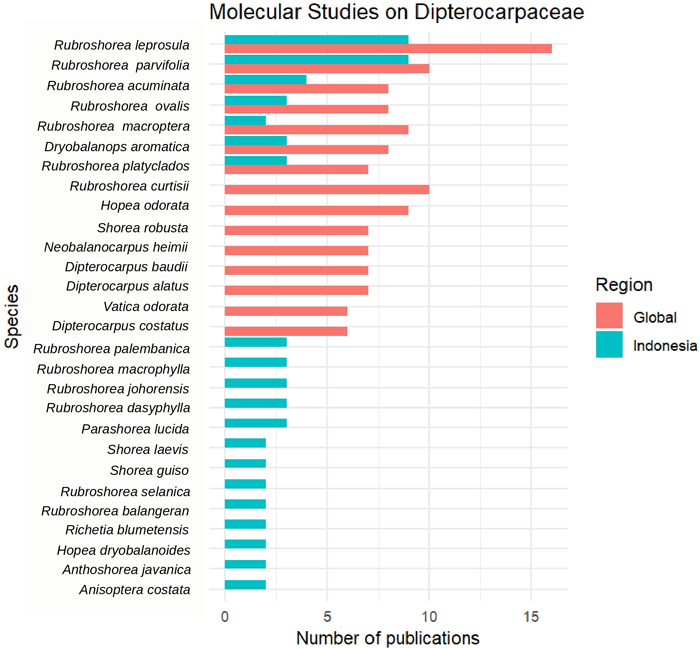
Fig. 3. Dipterocarpaceae species from Indonesia and other countries that have been studied using molecular and genetic approaches.
A total of 72 species have been studied so far, with varying research frequency. The species most frequently researched are Rubroshorea leprosula (syn. S. leprosula) and Rubroshorea parvifolia (syn. S. parvifolia), each appearing in nine publications (Fig. 3). Certain species have appeared in only a single publication, indicating limited research attention, particularly concerning several endemic and threatened species (Table 1), highlighting a significant gap in molecular and genetic research involving Dipterocarpaceae species in Indonesia.
| Table 1. Endemic and threatened Dipterocarpaceae species with limited molecular and genetic research in Indonesia. | ||||
| No | Species | Distribution area | IUCN status | References |
| 1 | Anisoptera costata | Bangladesh; Brunei Darussalam; Cambodia; Indonesia (Kalimantan, Sumatera, Java); Lao People’s Democratic Republic; Malaysia (Sarawak, Sabah, Peninsular Malaysia); Myanmar (Myanmar (mainland)); Philippines; Thailand; Viet Nam | Endangered | (Indrioko et al. 2006; Nguyen et al. 2017; Moura et al. 2019) |
| 2 | Dipterocarpus littoralis | Nusakambangan Island, Central Java, Indonesia | Critically endangered | (Ashton 1982; Dwiyanti et al. 2014b; Hamidi and Robiansyah 2018) |
| 3 | Hopea bilitonensis | Bangka Belitung (Indonesia) and Perak (Malaysia) | Critically endangered | (Ashton 1982; Chua et al. 2023; Kusuma et al. 2024) |
| 4 | Parashorea globosa | Indonesia and Kledang Saoing (Perak) | Critically endangered | (Indrioko et al. 2006; Kusuma et al. 2023) |
| 5 | Rubroshorea selanica | Maluku Island, Indonesia | Vulnerable | (Rachmat et al. 2012a, 2024; Yulita et al. 2023) |
| 6 | Upuna borneensis | Kalimantan, Indonesia | Vulnerable | (Indrioko et al. 2006; Randi et al. 2019; Neo et al. 2020) |
| 7 | Vatica bantamensis | Java, Indonesia | Critically endangered | (Indrioko et al. 2006; Robiansyah 2018) |
This pattern observed in Indonesia is also reflected globally, where molecular and genetic research on Dipterocarpaceae similarly focuses on a limited number of species. A total of 274 Dipterocarpaceae species have been studied globally using these approaches, and R. leprosula appears to be the most frequently studied species, cited in 16 publications. Other notable species exhibiting high research frequency include R. parvifolia and Rubroshorea curtisii (syn. Shorea curtisii), each appearing in 10 publications. These findings indicate that molecular and genetic research on Dipterocarpaceae tends to prioritize species characterized by high economic value and broad geographic distribution.
3.3 Trends in molecular and genetic methods in Dipterocarpaceae research
The analysis of the data highlights significant changes in the application of molecular methods to study Dipterocarpaceae from 1994 to 2025. Global molecular and genetic research on this family began in 1994, employing methods such as DNA fragment analysis and direct sequencing, as evidenced by three published studies (Fig. 4). During this period (1994–2000), no studies were conducted in Indonesia. Between 2001 and 2010, global research was dominated by direct sequencing, with 26 publications, compared to only 5 publications using fragment-based methods.
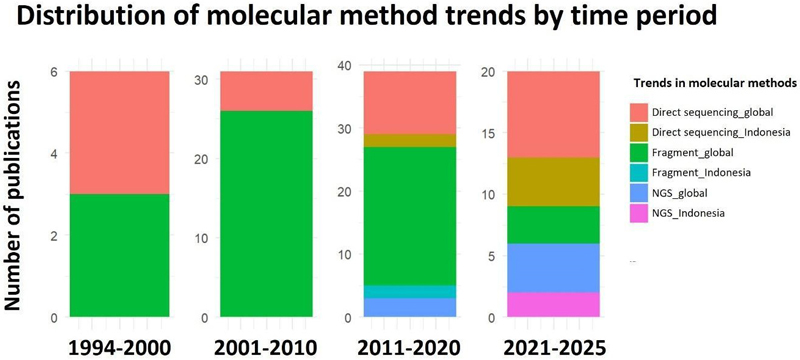
Fig. 4. Trends in the use of molecular and genetic methods in global and Indonesia Dipterocarpaceae research during 1994–2025. Direct sequencing: Sanger sequencing and SSR analysis via capillary electrophoresis, fragment analysis: marker analyses based on DNA fragment length variation (e.g., RAPD, RFLP, AFLP, ISSR, SRAP, and SSR markers based on acrylamide gel electrophoresis), NGS: Next Generation Sequencing.
Indonesia commenced its molecular and genetic research in early 2015, with a balanced proportion between fragment-based analysis methods, specifically Random Amplified Polymorphic DNA (RAPD) (2 publications) and direct sequencing (2 publications). This pattern mirrors early global trends observed in molecular and genetic research of Dipterocarpaceae (1994–2000), and indicating a delayed adoption of these methodologies in Indonesia. In the global landscape (2011–2020), the emergence of NGS methods became evident (3 publications), alongside an increase in fragment-based methods (from 5 to 10 publications), while direct sequencing remained dominant (22 publications) (Fig. 4).
Technological advancement in Indonesia during 2021–2025, as illustrated in Fig. 4, demonstrates that direct sequencing and NGS were dominant at the national level, with 4 and 2 publications, respectively (Fig. 4). While fragment markers remained dominant globally (7 publications), and NGS increased to 4 publications. Notably, direct sequencing declined from 22 to 3 publications (Fig. 4). This development suggests that Indonesia has recently accelerated the adoption of advanced sequencing technologies.
3.4 Scientific collaboration patterns and research themes in Indonesian Dipterocarpaceae research
The findings from the institutional network analysis of co-authorship reveal that research on the Dipterocarpaceae family in Indonesia, employing molecular and genetic methodologies, is fragmented and is presently supported by only a limited number of prominent institutions (Fig. 5). Figure 5 displays three clusters, distinguished by the colors green, blue, and red. The green cluster comprises academic institutions, including the Faculty of Agriculture at Ehime University, Japan; the Graduate School of Agriculture at Ehime University, Japan; the Department of Silviculture at the Faculty of Forestry and Environment, IPB University, Indonesia; and the Department of Forest Genetics and Tree Breeding at the University of Göttingen, Germany. The four nodes within the green cluster are similar in size and in close proximity, indicating a relatively high frequency of collaborative engagements among these institutions. The blue cluster shows two notable institutions: the Research Center for Ecology and Ethnobiology (PREE) at the National Research and Innovation Agency (BRIN), Indonesia, and the Graduate School of Agricultural Sciences at Kyoto University, Japan. The cluster serves as a critical link connecting the green and red clusters.

Fig. 5. Bibliometric analysis of collaborative networks of institutions related to molecular and genetic research on Dipterocarpaceae in Indonesia. View larger in new window/tab.
The red cluster consists of five densely interconnected nodes, signifying an intense co-occurrence relationship among all the clusters involved. The red cluster comprises academic and industrial institutions, including PT Sari Bumi Kusuma-Indonesia, the Faculty of Forestry at Gadjah Mada University (UGM)-Indonesia, the Japan International Research Center for Agricultural Sciences (JIRCAS)-Japan, the Forestry and Forest Products Research Institute-Japan, and the Faculty of Life and Environmental Sciences at the University of Tsukuba-Japan. The proximity and thickness of the connecting lines between PT Sari Bumi Kusuma and the Faculty of Forestry at UGM underscore a strong partnership and collaboration.
A thematic classification of molecular research on the Dipterocarpaceae family in Indonesia reveals a clear predominance of research focusing on genetic diversity and population structure, comprising 9 publications (Fig. 6). This theme dominates the current research landscape, whereas other themes are less frequently represented, including genetic studies in ecology and forest management (7 publications), phylogeny, taxonomy, and species identification (3 publications), and method development (3 publications). The uneven thematic distribution indicates a strong preference for population-level genetic analysis and suggests that other research areas remain underexplored, thereby presenting opportunities for targeted collaborative initiatives.
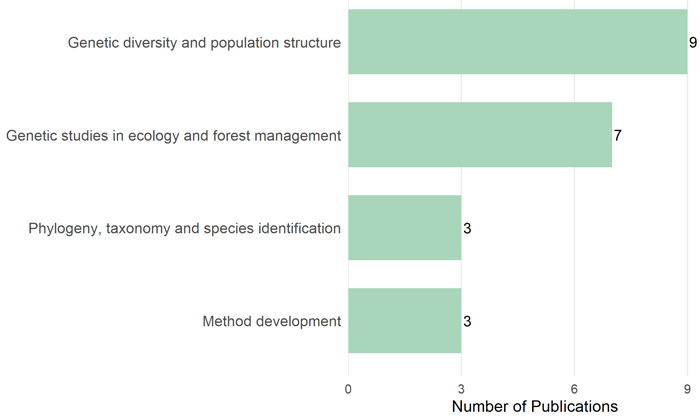
Fig. 6. Distribution of emerging research themes in Dipterocarpaceae molecular studies in Indonesia.
4 Discussion
4.1 Interpretation of findings from global research on Dipterocarpaceae based on keywords
The presence of two major clusters indicates that research on the Dipterocarpaceae family integrates multiple disciplines, given its considerable biological and economic significance (Widiyono 2021). The correlation observed between the red and green clusters implies that global research into Dipterocarpaceae employs a cross-disciplinary approach. For instance, the genus Shorea, the largest genus in the Dipterocarpaceae family, is prominently represented in the VOSviewer network. This prominence reflects research interest in the Shorea, arising not only from the considerable economic value of its wood, but also from its applications in traditional medicine and its potential pharmacological benefits (Marandi et al. 2016; Musa et al. 2024).
Moreover, the presence of geographic keywords such as Borneo, Malaysia, India, and Asia further suggests intensive research efforts in Southeast Asia. Although Dipterocarpaceae are believed to have originated from a Gondwanan superclade, with ancestral distribution recorded in South America, Africa, and Madagascar (Lamont et al. 2022), this raises concerns regarding a potential geographical imbalance in research coverage. Additionally, the keyword “genetic diversity” appears as a minor node, indicating that molecular-genetic research remain underrepresented. Molecular-genetic research are important for revealing genetic variation and developing genetically informed restoration strategies, thereby supporting the long-term conservation of Dipterocarpaceae as a key component of tropical forests (Ng et al. 2019).
An analysis of research on the Dipterocarpaceae family over the past two decades reveals a tendency for global research to focus on species of high commercial value, such as Shorea robusta (Yadav and Antil 2023) and R. leprosula (Gan and Lim 2004; Wistara et al. 2016). However, it is important to recognize that there are numerous other species, within the Dipterocarpaceae family, which comprises over 500 species globally (Maury-Lechon and Curtet 1998). Investigating less-popular, rare, and endemic species may reveal new ecological and pharmaceutical prospects. Implementing these research priorities will strengthen the scope and relevance of Dipterocarpaceae studies and improve their contribution to conservation and sustainable use.
4.2 Implications of uneven species representation in Dipterocarpaceae molecular research
Molecular and genetic research on Dipterocarpaceae remains disproportionately focused on a limited number of species, particularly in Indonesia and globally. The species Rubroshorea leprosula and R. parvifolia are the primary subjects of research (Fig. 3). This focus can be attributed to their extensive distribution (Symington 1943; Ashton 1982), their recognized status as a model species for examining plant responses to anthropogenic disturbance (Widiyatno et al. 2017), and the availability of genetic references with various molecular markers (Lee et al. 2004b; Ng et al. 2009b, 2021), reflecting the combined influence of ecological suitability and research accessibility. Additionally, the economic significance and industrial demand for this species further contribute to the predominance of research on them (Gan and Lim 2004; Iswanto et al. 2022). The global trade in commercial timber species necessitates a legal framework, making the traceability of timber origin crucial for compliance with legal and market standards (Gasson et al. 2021), thereby positioning molecular approaches as essential tools for verification and ensuring compliance within the industry.
Given the high demand in the forestry industry, molecular and genetic research on R. leprosula and R. parvifolia is driven by the necessity to evaluate the impacts of timber extraction on genetic diversity and population structure (Izuno et al. 2013; Widiyatno et al. 2017). The threats posed by fragmentation, deforestation, and overexploitation (Lee et al. 2001; Cao et al. 2006; Fukue et al. 2007) have further underscored the importance of research focused on conservation and sustainable resource management. In addition, efforts in molecular and genetic research on Dipterocarpaceae have been initiated to trace the geographical origins of wood (Nuroniah et al. 2010). Existing genetic references, such as genome sequences (Ng et al. 2021) and various molecular markers (Lee et al. 2004b; Ng et al. 2009b), have also facilitated further studies on these two species.
Research conducted in Indonesia has predominantly centered on the genus Rubroshorea, specifically the species R. leprosula and R. parvifolia. In contrast, the genera Anisoptera, Cotylelobium, Upuna, and Vatica have received minimal attention despite their crucial ecological value as carbon storage and providing essential habitat for a diverse array of flora and fauna under the canopy (Nguyen et al. 2021). The lack of research focus on these four genera can be attributed to their restricted geographical distribution, smaller population sizes (Fambayun et al. 2020), and a relatively smaller number of species (Ashton 1982). Species with limited distributions are typically more vulnerable to threats such as habitat fragmentation, deforestation, and long-term impacts of climate change (Deb et al. 2017).
Moreover, dipterocarp species recognized as endemic and classified by the International Union for Conservation of Nature (IUCN) Red List of Threatened Species as having high conservation status tend to receive less research interest than those with significant commercial value. This trend can be explained by various factors, including the narrow distribution of endemic species accompanied by a small number of samples. Such limitations complicate genetic research, particularly those focused on population genetics, which require adequate sample sizes for meaningful statistical analysis. Current findings in molecular and genetic research reveal a pronounced lack of interest in endemic species and those designated as high conservation priorities by the IUCN (Table 1).
Critical research gaps remain for endemic and IUCN-listed Dipterocarpaceae species, as logistical constraints and an emphasis on economically valuable taxa hinder comprehensive field collections (Hoveka et al. 2020; Omar and Elgamal 2021). Bias toward commercially important species and limited collaboration have left endemic taxa understudied. Low population densities further constrain sample sizes, limiting robust statistical inference. Addressing the existing disparity between research efforts targeting endemic species and those with high conservation value requires urgent attention from the Indonesian government, which should prioritize national research initiatives. Bridging this gap is essential for developing evidence-based management policies that consider both widespread and endemic Dipterocarpaceae species, thus ensuring that conservation strategies adequately reflect the ecological and evolutionary importance of this family.
4.3 Molecular research trends in Dipterocarpaceae: Indonesia and global context
Molecular genetic research on Dipterocarpaceae commenced globally in 1994. However, Indonesia adopted these methodologies approximately 20 years later, around 2015 (Fig. 4). This significant lag indicates considerable limitations in both infrastructure and human resources within the country. Early global studies (1994–2000) employed both DNA fragment analysis and direct sequencing techniques to investigate genetic variation and phylogeny. Specifically, RAPD markers were utilized to assess intraspecific and interspecific genetic diversity in Shorea species (Harada et al. 1994) and to investigate phylogenetic relationships within the Dipterocarpaceae family (Rath et al. 1998). Meanwhile, the Polymerase Chain Reaction-Restriction Fragment Length Polymorphism (PCR-RFLP) and cpDNA sequences were used to reconstruct the phylogenetic relationships among and within genera to evaluate traditional taxonomic classifications (Tsumura et al. 1996; Kajita et al. 1998; Kamiya et al. 1998; Dayanandan et al. 1999). This period marked the initiation of research using direct sequencing methods, particularly in the development of Simple Sequence Repeat (SSR) markers in Dipterocarpaceae (Terauchi 1994; Ujino et al. 1998). The studies conducted during this time primarily focused on genetic diversity, phylogenetic relationships, and early marker development, with strong contributions from Japanese researchers.
Between 2001 and 2010, molecular studies in this field advanced substantially. Direct sequencing emerged as the predominant method, primarily employing Sanger sequencing for phylogenetic analyses and SSR marker development (Stacy et al. 2001; Isagi et al. 2002; Lee et al. 2004a, b; Nanami et al. 2007; Ng et al. 2009a; Masuda et al. 2010). Phylogenetic reconstruction of the Dipterocarpaceae subfamily based on chloroplast DNA (cpDNA) and low-copy nuclear sequence markers was also prevalent during this research period (Kamiya et al. 2005; Gamage et al. 2006; Yuwa-amornpitak et al. 2006), alongside studies of primer transferability across species (Stacy et al. 2001; Lee et al. 2004b; Ng et al. 2009b). The development of Sequence Characterized Amplified Region (SCAR) markers occurred (Nuroniah et al. 2010), and SSR-based approaches using capillary electrophoresis were employed to assess the genetic impact of selective logging (Ng et al. 2009c; Obayashi et al. 2012). Overall, this period witnessed a transition in Dipterocarpaceae research from basic genetic variation assessment toward the development of robust molecular markers and applied conservation genetics (Pandey and Geburek 2009; Masuda et al. 2010). Global research during this phase was strongly influenced by Japanese institutions, with emerging international collaborations, while early Indonesia–Germany collaborations emerged through academic exchanges (Indrioko et al. 2006; Nuroniah et al. 2010).
Between 2011 and 2020, while molecular and genetic research in Indonesia continued to lag behind global developments, research collaborations have expanded from initial partnerships with Indonesia and Germany to include Japan, driven by Indonesian researchers studying in Japan (Rachmat et al. 2012b; Dwiyanti et al. 2014a, b, 2015). Such collaboration has supported capacity building in molecular biology and genetics, strengthening international collaboration and Indonesia’s role in global research on Dipterocarpaceae. The delayed adoption of advanced methodologies in Indonesia is evident in the initial use of fragment analysis-based methods (RAPD) (Ritonga et al. 2018; Indriani et al. 2019) and direct sequencing techniques (Zulfahmi et al. 2015; Harnelly et al. 2018) that commenced in 2015. Notably, fragment analysis-based methods, particularly RAPD, have constituted a global trend since 1994. This shows that Indonesia remains in the early stages of adopting molecular and genetic methods. In contrast, global trends have progressed towards next-generation sequencing (NGS) techniques in Dipterocarpaceae molecular genetic research. The application of NGS-based approaches during this period has been instrumental in the development of polymorphic microsatellite markers using the Illumina MiSeq platform (Guo et al. 2017; Utomo et al. 2018; Tinio et al. 2019).
Between 2021 and 2025, Indonesia showed rapid advancements in molecular applications. A prominent approach is the use of Restriction-site Associated DNA sequencing (ddRAD-seq) for digestion, which enables Single Nucleotide Polymorphism (SNP) genotyping to support genomic prediction models and genome-wide association studies (GWAS) (Akutsu et al. 2023). In addition, MIG-seq (Suyama and Matsuki 2015) has been applied for genotyping, SNP detection, and analysis of genetic diversity and population structure of Hopea bilitonensis, thereby supporting conservation efforts (Kusuma et al. 2024). The absence of fragment-based methods during this period indicates that improvements in infrastructure and technological advancement in Indonesia were driven by increased human resource capacity.
Interestingly, global trends from 2021 to 2025 period continue to show a prevalence of fragment-based methodologies (Fig. 4). This pattern may reflect their sustained use as foundational techniques in several countries, including Thailand (Senakun et al. 2011; Srisawat et al. 2013), Vietnam (Duc et al. 2016; Vu et al. 2019), India (Shukla and Sharma 2017), and China (Tang et al. 2015; Xu et al. 2024), thereby diversifying the previously Japan-centric research landscape. The choice of methods and molecular markers is heavily influenced by the specific focus and objectives of the research, with ongoing technological advancements driving the adoption of molecular approaches, while maintaining consideration of ease, stability, effectiveness, and the required level of data resolution.
4.4 Linking collaboration patterns with research themes in Indonesian Dipterocarpaceae research
The visualization of the collaboration network among institutions and countries shows that research on Dipterocarpaceae in Indonesia is significantly supported by international cooperation (Fig. 5). The analysis reveals three primary clusters, which reflect both national and international collaboration dynamics. Universitas Gadjah Mada (UGM) established connections; 1) Nationally it maintains close collaborations with a commercial timber concession company of PT Sari Bumi Kusuma; and 2) internationally it forms robust partnerships with several Japanese institutions, particularly the Japan International Research Center for Agricultural Sciences (JIRCAS), the Forestry and Forest Products Research Institute (FFPRI), and the Faculty of Life and Environmental Sciences at the University of Tsukuba, forming a dense and effective collaborative cluster.
Moreover, institutions such as Ehime University and Kyoto University (Japan) contribute significantly through their involvement with BRIN and UGM, reflecting the strengthening scientific collaboration between Japan and Indonesia. European engagement is also beginning to emerge, exemplified by collaboration with the University of Göttingen (Germany), which has partnered with the Department of Silviculture, Faculty of Forestry and Environment at IPB University. As illustrated in Fig. 5, existing molecular and genetic research collaborations are predominantly established between Indonesia and partners from outside the Southeast Asian region. This pattern suggests that, despite Southeast Asia representing the center of Dipterocarpaceae biodiversity, collaborative linkages among countries within the region remain relatively limited. Expanding intra-regional collaboration within Southeast Asia could facilitate the development of more comprehensive and regionally contextualized scientific evidence to support conservation and forest management strategies.
These findings show the importance of government support in facilitating international collaboration through joint funding initiatives and promoting scientific networking among countries. Furthermore, enhancing national collaboration is crucial. This can be accomplished by increasing human resource capacity, initiating joint consortium projects, and fostering cross-institutional research programs. Sustained long-term collaboration must be encouraged and expanded, particularly within the context of tropical biodiversity research, wherein Indonesia holds a significant advantage. Thus, the results derived from this network visualization can serve as a valuable reference for designing strategies that strengthen national underpinning by equitable and sustainable global partnerships.
With regard to research themes, the predominance of studies focused on genetic diversity and population structure indicates that the current molecular research agenda remains largely concentrated on these aspects (Fig. 6). Other areas, including phylogeny, taxonomy, species identification, genetic studies in forest ecology and management, as well as methodological development, are comparatively less represented. This uneven thematic distribution reflects the current scope of molecular research within Dipterocarpaceae.
Overall, these findings advocate for a dual strategy to advance molecular research on Dipterocarpaceae in Indonesia: (1) consolidating and expanding national and international collaborative networks to ensure sustainable and balanced partnerships, and (2) advancing and elaborating molecular research towards application-oriented approaches that may require stronger integration between molecular genetics and ecological studies. This can be achieved by translating genetic data into practical applications, such as identifying climate-resilient genotypes for reforestation, and predicting species’ range shifts under future climate scenarios by integrating genomic vulnerability data with ecological parameters. By combining these approaches, Indonesia may support more comprehensive and impactful research on tropical biodiversity.
5 Conclusion
Global research on the Dipterocarpaceae family is dominated by two main research focuses, namely forest ecology and conservation studies, and phytochemistry and pharmaceutical applications. Visualization of keyword analysis using VOSviewer shows that while this family has employed a cross-disciplinary approach, molecular and genetic research remain limited and are not prioritized.
Meanwhile, the dominance of molecular and genetic research on the Dipterocarpaceae family, both nationally and globally, highlights an imbalance in research focus, with a primary emphasis on select species. Specifically, there is notable intensive research on R. leprosula and R. parvifolia, attributed to their extensive geographical distribution, abundance, ease of sampling, and significant economic value. This has resulted in a scarcity of molecular and genetic data for other Dipterocarpaceae species. Endemic species, or those classified as having high conservation status under IUCN criteria, often receive inadequate attention, despite their crucial roles within ecosystems. These findings indicate a critical deficiency in the molecular and genetic research necessary to inform conservation initiatives.
In assessing trends in molecular and genetic research within Dipterocarpaceae in Indonesia, it is apparent that the country is approximately two decades behind, having commenced such research only in 2015, compared to global trends that emerged in 1994. Interestingly, the timeframe from 2021 to 2025 shows a shift toward integrating NGS technology, indicating advances in both infrastructure and human resource readiness that were not observed in prior periods. Current collaborative efforts involve international partnerships with countries such as Japan and Germany; however, the research network remains fragmented. To strengthen national research capacity, including expanding and deepening molecular biology and genetics research, it is necessary to foster more diverse international cooperation and enhance domestic cross-disciplinary research.
While research has predominantly focused on genetic diversity and population structure, it is important to consider strengthening attention towards molecular ecology, particularly given the increasing urgency of global environmental change, which demands practical adaptation strategies to ensure the long-term survival of plant species. Overall, this systematic review not only reveals taxonomic and geographical gaps within the field but also emphasizes the urgent need to develop technological capabilities, foster collaborative efforts, and implement genetic data-driven policies. Implementing a comprehensive research roadmap through strengthening national and international research collaboration networks and advancing molecular technologies can enhance integrated research frameworks.
Author contributions
Conceptualization: HHR; Study design: NA, HHR, AS; Methodology: NA; Data analysis: NA; Investigation: NA, HHR; Data curation: NA, HHR, AS, FGD, IZS, OG, KK; Supervision: HHR, AS, FGD, IZS, OG, KK; Visualization: NA; Writing: NA, HHR, AS, FGD, IZS, OG, KK.
Acknowledgements
The authors gratefully acknowledge the educational funding support provided by the Deputy for Human Resources and Science and Technology, National Research and Innovation Agency (BRIN), through the research-based postgraduate program (Degree by Research) under grant number B-9829/II.5/SI.06.01/12/2024. The authors gratefully acknowledge that this research was conducted through a collaborative partnership between the Research Center for Ecology, National Research and Innovation Agency and the Faculty of Forestry and Environment, IPB University under agreement numbers 290/V/KS/07/2023 and 152/IT3.F4/HK.07/2023. This study is part of the Research and Innovation Program for an Advanced Indonesia (Program Riset dan Inovasi untuk Indonesia Maju/RIIM) Batch 10, based on the Decree of the Deputy for Research and Innovation Facilitation, National Research and Innovation Agency (BRIN), No. 12/II.7/HK/2026 concerning the Second Amendment to Decree No. 105/II.7/HK/2025 on the recipients of the Research and Innovation Program. The authors deeply appreciate Dr. Mega Atria and Niarsi Merry Hemelda, Ph.D., for their constructive suggestions on earlier versions of this manuscript. The authors also acknowledge the assistance of Grammarly in reviewing the final version of this manuscript.
References
Akutsu H, Na’iem M, Widiyatno, Indrioko S, Sawitri, Purnomo S, Uchiyama K, Tsumura Y, Tani N (2023) Comparing modeling methods of genomic prediction for growth traits of a tropical timber species, Shorea macrophylla. Front Plant Sci 14, article id 1241908. https://doi.org/10.3389/fpls.2023.1241908.
Appanah S, Ashton MS, Bawa KS, Curtet L, Elouard C, Jantan L, Krishnapillay B, Lee SS, Maury-Lechon G, Shiva M, Tompsett P, Weinland G (1998) A review of dipterocarps: taxonomy, ecology and silviculture. Center for International Forestry Research (CIFOR), Bogor, Indonesia. https://doi.org/10.17528/cifor/000463.
Ashton PS (1982) Dipterocarpaceae. In: Van Steenis CGGJ (ed) Flora Malesiana Ser I, 9. Springer, pp 237–552.
Ashton PS (2004) Dipterocarpaceae. In: Soepadmo E, Saw LG, Chung RCK (eds) Tree flora of Sabah and Sarawak. Forest Research Institute Malaysia, Kuala Lumpur, pp 63–337. https://doi.org/10.26525/TFSS5002.
Aslam MS, Ahmad MS, Mamat AS (2015) A phytochemical, ethnomedicinal and pharmacological review of genus Dipterocarpus. Int J Pharm Pharm Sci 7: 27–38.
Bartholomew D, Barstow M, Randi A, Bodos V, Cicuzza D, Kiat Hoo P, Juiling S, Khoo E, Kusumadewi Y, Majapun R, Maryani AA, Maycock CR, Nilus R, Pereira JT, Sang J, Robiansyah I, Sugau JB, Tanggaraju S, Tsen S, Chea Yiing L (2021) The red list of Bornean endemic Dipterocarps GTA Global Tree Assessment. Botanic Gardens Conservation Intern, Richmond, UK.
Brearley FQ, Banin LF, Saner P (2016) The ecology of the Asian Dipterocarps. Plant Ecol Divers 9: 429–436. https://doi.org/10.1080/17550874.2017.1285363.
Cao CP, Finkeldey R, Siregar IZ, Siregar UJ, Gailing O (2006) Genetic diversity within and among populations of Shorea leprosula Miq. and Shorea parvifolia Dyer (Dipterocarpaceae) in Indonesia detected by AFLPs. Tree Genet Genomes 2: 225–239. https://doi.org/10.1007/s11295-006-0046-0.
Chong KY, Chong R, Tan LWA, Yee ATK, Chua MAH, Wong KM, Tan HTW (2016) Seed production and survival of four Dipterocarp species in degraded forests in Singapore. Plant Ecol Divers 9: 483–490. https://doi.org/10.1080/17550874.2016.1266404.
Chua LSL, Hamidi A, Rachmat HYK, Randi A, Robiansyah I, Kusuma YWC (2023) Hopea bilitonensis. The IUCN Red List of Threatened Species 2023, e.T33383A125628463. https://dx.doi.org/10.2305/IUCN.UK.2023-1.RLTS.T33383A125628463.en.
Chung AYC, Maycock CR, Khoo E, Hastie A, Nilus R, Majapun R, Kimjus K, Chey VK (2013) New records of insects associated with Bornean endemic Dipterocarp seedlings. J Trop For Sci 25: 5–11.
Cvetković T, Hinsinger DD, Strijk JS (2019) Exploring evolution and diversity of Chinese Dipterocarpaceae using next-generation sequencing. Sci Rep 9, article id 11639. https://doi.org/10.1038/s41598-019-48240-y.
Das SC, Alam MS, Hossain MA (2018) Diversity and structural composition of species in dipterocarp forests: a study from Fasiakhali Wildlife Sanctuary, Bangladesh. J For Res 29: 1241–1249. https://doi.org/10.1007/s11676-017-0548-7.
Dayanandan S, Ashton PS, Williams SM, Primack RB (1999) Phylogeny of the tropical tree family Dipterocarpaceae based on nucleotide sequences of the chloroplast rbcL gene. Am J Bot 86: 1182–1190. https://doi.org/10.2307/2656982.
Deb JC, Phinn S, Butt N, McAlpine CA (2017) The impact of climate change on the distribution of two threatened Dipterocarp trees. Ecol Evol 7: 2238–2248. https://doi.org/10.1002/ece3.2846.
Donthu N, Kumar S, Mukherjee D, Pandey N, Lim WM (2021) How to conduct a bibliometric analysis: an overview and guidelines. J Bus Res 133: 285–296. https://doi.org/https://doi.org/10.1016/j.jbusres.2021.04.070.
Duc NM, Duy VD, Xuan BTT, Thang BV, Ha NTH, Tam NM (2016) Genetic structure of the threatened Dipterocarpus costatus populations in lowland tropical rainforests of Southern Vietnam. Genet Mol Res 15, article id gmr15048821.
Dwiyanti FG, Kamiya K, Harada K (2014a) Phylogeographic structure of the commercially important tropical tree species Dryobalanops aromatica Gaertn.F. (Dipterocarpaceae) revealed by microsatellite markers. Reinwardtia 14: 43–51.
Dwiyanti FG, Harada K, Siregar IZ, Kamiya K (2014b) Population genetics of the critically endangered species Dipterocarpus littoralis Blume (Dipterocarpaceae) endemic in Nusakambangan Island, Indonesia. Biotropia 21: 1–12. https://doi.org/10.11598/btb.2014.21.1.304.
Dwiyanti FG, Chong L, Diway B, Fah LY, Siregar IZ, Subiakto A, Kamiya K, Ninomiya I, Harada KA (2015) Population genetic diversity in the genus Dryobalanops Gaertn.f. (Dipterocarpaceae) based on nuclear microsatellite markers. J-sustain 3: 12–20. https://doi.org/10.24910/jsustain/3.1/1220.
Fambayun RA, Kalima T, Rachmat HH (2020) Species diversity and threats on the habitat of Vatica javanica in the Ciangir Forest, Indonesia. IOP Conf Ser Earth Environ Sci 533, article id 012013. https://doi.org/10.1088/1755-1315/533/1/012013.
Fukue Y, Kado T, Lee SL, Ng KKS, Muhammad N, Tsumura Y (2007) Effects of flowering tree density on the mating system and gene flow in Shorea leprosula (Dipterocarpaceae) in Peninsular Malaysia. J Plant Res 120: 413–420. https://doi.org/10.1007/s10265-007-0078-z.
Gamage DT, De Silva MP, Inomata N, Yamazaki T, Szmidt AE (2006) Comprehensive molecular phylogeny of the sub-family Dipterocarpoideae (Dipterocarpaceae) based on chloroplast DNA sequences. Genes Genet Syst 81: 1–12. https://doi.org/10.1266/ggs.81.1.
Gan KS, Lim SC (2004) Common commercial timbers of Peninsular Malaysia. Research Pamphlet. Forest Research Institute Malaysia, Kuala Lumpur. ISBN 9832181550.
Gasson PE, Lancaster CA, Young R, Redstone S, Miles-Bunch IA, Rees G, Guillery RP, Parker-Forney M, Lebow ET (2021) WorldForestID: addressing the need for standardized wood reference collections to support authentication analysis technologies; a way forward for checking the origin and identity of traded timber. Plants People Planet 3: 130–141. https://doi.org/10.1002/ppp3.10164.
Ghazoul J (2016) Dipterocarp biology, ecology, and conservation. Oxford University Press. https://doi.org/10.1093/acprof:oso/9780199639656.001.0001.
Guo J, Shang S, Wang C, Zhao Z, Zeng J (2017) Twenty microsatellite markers for the endangered Vatica mangachapoi (Dipterocarpaceae). Appl Plant Sci 5, article id 1600134. https://doi.org/10.3732/apps.1600134.
Hamidi A, Robiansyah I (2018) Dipterocarpus littoralis. The IUCN Red List of Threatened Species 1998: e.T33376A9773710. https://doi.org/10.2305/IUCN.UK.1998.RLTS.T33376A9773710.en.
Hamilton R, Hall T, Stevenson J, Penny D (2019) Distinguishing the pollen of Dipterocarpaceae from the seasonally dry and moist tropics of South-East Asia using light microscopy. Rev Palaeobot Palynol 263: 117–133. https://doi.org/10.1016/j.revpalbo.2019.01.012.
Harada K, Kinoshita A, Shukor NAA, Tachida H, Tsuneyuki Y (1994) Genetic variation estimated in three Shorea species by the RAPD analysis. Jpn J Genet 69: 713–718. https://doi.org/10.1266/jjg.69.713.
Harnelly E, Thomy Z, Fathiya N (2018) Phylogenetic analysis of Dipterocarpaceae in Ketambe Research Station, Gunung Leuser National Park (Sumatra, Indonesia) based on rbcL and matK genes. Biodiversitas 19: 1074–1080. https://doi.org/10.13057/biodiv/d190340.
Hayward RM, Banin LF, Burslem DFRP, Chapman DS, Philipson CD, Cutler MEJ, Reynolds G, Nilus R, Dent DH (2021) Three decades of post-logging tree community recovery in naturally regenerating and actively restored dipterocarp forest in Borneo. For Ecol Manage 488, article id 119036. https://doi.org/10.1016/j.foreco.2021.119036.
Hebert PDN, Cywinska A, Ball SL, DeWaard JR (2003) Biological identifications through DNA barcodes. Proc R Soc B Biol Sci 270: 313–321. https://doi.org/10.1098/rspb.2002.2218.
Hollingsworth PM, Graham SW, Little DP (2011) Choosing and using a plant DNA barcode. PLoS ONE 6, article id e19254. https://doi.org/10.1371/journal.pone.0019254.
Hoveka LN, van der Bank M, Bezeng BS, Davies TJ (2020) Identifying biodiversity knowledge gaps for conserving South Africa’s endemic flora. Biodivers Conserv 29: 2803–2819. https://doi.org/10.1007/s10531-020-01998-4.
Indriani F, Siregar UJ, Matra DD, Siregar IZ (2019) Ecological aspects and genetic diversity of Shorea balangeran in two forest types of Muara Kendawangan Nature Reserve, West Kalimantan, Indonesia. Biodiversitas 20: 482–488. https://doi.org/10.13057/biodiv/d200226.
Indrioko S, Gailing O, Finkeldey R (2006) Molecular phylogeny of Dipterocarpaceae in Indonesia based on chloroplast DNA. Plant Syst Evol 261: 99–115. https://doi.org/10.1007/s00606-006-0435-8.
Isagi Y, Kenta T, Nakashizuka T (2002) Microsatellite loci for a tropical emergent tree, Dipterocarpus tempehes V. Sl. (Dipterocarpaceae). Mol Ecol Notes 2: 12–13. https://doi.org/10.1046/j.1471-8286.2002.00127.x.
Iswanto AH, Ginting IM, Rachmat HH, Hakim L, Sucipto T (2022) Exploration of high-quality wood-producing trees on the Universitas Sumatera Utara (USU) Medan campus’s green space. IOP Conf Ser Earth Environ Sci 1115, article id 012003. https://doi.org/10.1088/1755-1315/1115/1/012003.
Izuno A, Indrioko S, Widiyatno W, Prasetyo E, Kasmujiono K, Isagi Y (2013) Current plantation practices have negligible genetic effects on planted Dipterocarps in the tropical rainforest. Silvae Genet 62: 292–299. https://doi.org/10.1515/sg-2013-0035.
Jiang KW, Zhang R, Zhang ZF, Pan B, Tian B (2020) DNA barcoding and molecular phylogeny of Dumasia (Fabaceae: Phaseoleae) reveals a cryptic lineage. Plant Divers 42: 376–385. https://doi.org/10.1016/j.pld.2020.07.007.
Kajita T, Kamiya K, Nakamura K, Tachida H, Wickneswari R, Tsumura Y, Yoshimaru H, Yamazaki T (1998) Molecular phylogeny of Dipetrocarpaceae in Southeast Asia based on nucleotide sequences of matK,trnL intron, and trnL-trnF intergenic spacer region in chloroplast DNA. Mol Phylogenet Evo 10: 202–209. https://doi.org/https://doi.org/10.1006/mpev.1998.0516.
Kamiya K, Harada K, Ogino K, Kajita T, Yamazaki T, Lee HS, Ashtion PS (1998) Molecular phylogeny of dipterocarp species using nucleotide sequences of two non-coding regions in chloroplast DNA. Tropics 7: 195–207. https://doi.org/10.3759/tropics.7.195.
Kamiya K, Harada K, Tachida H, Ashton PS (2005) Phylogeny of PgiC gene in Shorea and its closely related genera (Dipterocarpaceae), the dominant trees in Southeast Asian tropical rain forests. Am J Bot 92: 775–788. https://doi.org/10.3732/ajb.92.5.775.
Kettle CJ (2010) Ecological considerations for using dipterocarps for restoration of lowland rainforest in Southeast Asia. Biodivers Conserv 19: 1137–1151. https://doi.org/10.1007/s10531-009-9772-6.
Kusuma YWC, Chua LSL, Hamidi A, Rachmat HH, Kusumadewi Y, Randi A, Robiansyah I (2023) Parashorea globosa. The IUCN Red List of Threatened Species 2023: e.T31765A215141879. https://doi.org/10.2305/IUCN.UK.2023-1.RLTS.T31765A215141879.en.
Kusuma YWC, Surya MI, Kurniawati S, Yulita KDS, Destri, Risna RA, Sudarmonowati E, Matsuo A, Kurita K, Suyama Y, Isagi Y (2024) Genetic diversity and structure of Hopea bilitonensis, an endemic Dipterocarp from Belitung Island, Indonesia. J Asia Pac Biodivers 17: 400–405. https://doi.org/10.1016/j.japb.2024.01.008.
Lamont BB, Thornhill AH, Korczynskyj D (2022) Gondwanan origin of the Dipterocarpaceae-Cistaceae-Bixaceae is supported by fossils, areocladograms, ecomorphological traits and tectonic-plate dynamics. Frontiers of Biogeography 14, article id FB56893. https://doi.org/10.21425/F5FBG56893.
Lee SL, Wickneswari R, Mahani MC, Zakri AH (2001) Comparative genetic diversity studies of Shorea leprosula (Dipterocarpaceae) using RAPD and allozyme markers. J Trop For Sci 13: 202–215.
Lee SL, Tani N, Ng KKS, Tsumura Y (2004a) Characterization of 15 polymorphic microsatellite loci in an endangered tropical tree Hopea bilitonensis (Dipterocarpaceae) in Peninsular Malaysia. Mol Ecol Notes 4: 147–149. https://doi.org/10.1111/j.1471-8286.2004.00593.x.
Lee SL, Tani N, Ng KKS, Tsumura Y (2004b) Isolation and characterization of 20 microsatellite loci for an important tropical tree Shorea leprosula (Dipterocarpaceae) and their applicability to S. parvifolia. Mol Ecol Notes 4: 222–225. https://doi.org/10.1111/j.1471-8286.2004.00623.x.
Llorente-Culebras S, Ladle RJ, Santos AMC (2023) Publication trends in global biodiversity research on protected areas. Biol Conserv 281, article id 109988. https://doi.org/10.1016/j.biocon.2023.109988.
Marandi RR, Britto SJ, Soreng PK (2016) Phytochemical profiling, antibacterial screening and antioxidant properties of the sacred tree (Shorea robusta Gaertn.) of Jharkhand. Int J Pharm Sci Res 7: 2874–2888. https://doi.org/10.13040/IJPSR.0975-8232.7(7).2874-88.
Margules CR, Pressey RL (2000) Systematic conservation planning. Nature 405: 243–253. https://doi.org/10.1038/35012251.
Masuda S, Tani N, Ohtani M, Lee SL, Muhammad N, Tsumura Y (2010) Isolation and characterization of 12 microsatellite loci for the tropical tree species Shorea maxwelliana and S. laevis (Dipterocarpaceae). Conserv Genet Resour 2: 109–111. https://doi.org/10.1007/s12686-010-9225-2.
Maury-Lechon G, Curtet L (1998) Biogeography and evolutionary systematics of Dipterocarpaceae. In: Appanah S, Turnbull JM (eds) A review of dipterocarps: taxonomy, ecology and silviculture. Center for International Forestry Research, Bogor, Indonesia, pp 5–44. ISBN 979-8764-20-X.
Maycock CR, Kettle CJ, Khoo E, Pereira JT, Sugau JB, Nilus R, Ong RC, Amaludin NA, Newman MF, Burslem DFRP (2012) A revised conservation assessment of dipterocarps in sabah. Biotropica 44: 649–657. https://doi.org/10.1111/j.1744-7429.2011.00852.x.
Moura CCDM, Brambach F, Jair K, Bado H, Krutovsky KV, Kreft H, Tjitrosoedirdjo SS, Siregar IZ, Gailing O (2019) Integrating DNA barcoding and traditional taxonomy for the identification of Dipterocarps in remnant lowland forests of Sumatra. Plants 8, article id 461. https://doi.org/10.3390/plants8110461.
Mufarhatun N, Susilowati A, Hilwan I, Arrofaha N, Yulita KS, Dwiyanti FG, Hidayat A, Kamiya K, Rachmat HH (2023) Leaf morphological traits of nine major tropical trees of Shorea species (Dipterocarpaceae). Biodiversitas 24: 1704–1712. https://doi.org/10.13057/biodiv/d240344.
Musa A, Aminah NS, Kristanti AN, Fathoni I, Amalia RT, Thant TM, Rajasulochana P, Takaya Y (2024) Phytochemical and pharmacological profile of genus Shorea: a review of the recent literature. Heliyon 10, article id e23649. https://doi.org/10.1016/j.heliyon.2023.e23649.
Nanami S, Ikeda S, Tani N, Tan S, Diway B, Harada K, Tsumura Y, Itoh A, Yamakura T (2007) Development of microsatellite markers for Dryobalanops aromatica (Dipterocarpaceae), a tropical emergent tree in Southeast Asia. Mol Ecol Notes 7: 623–625. https://doi.org/10.1111/j.1471-8286.2006.01653.x.
Neo L, Wong KM, Tan HTW (2020) A synopsis of the endemic plant genera of Borneo. Nord J Bot 38, article id e02871. https://doi.org/10.1111/njb.02871.
Ng CH, Lee SL, Ng KKS, Muhammad N, Lee CT (2009a) Development of microsatellite markers for Shorea platyclados (Dipterocarpaceae). Conserv Genet Resour 1: 317–319. https://doi.org/10.1007/s12686-009-9073-0.
Ng CH, Lee SL, Tnah LH, Siong KK, Lee CT, Diway B, Khoo E (2017) Geographic origin and individual assignment of Shorea platyclados (Dipterocarpaceae) for forensic identification. PLoS ONE 12, article id e0176158. https://doi.org/10.1371/journal.pone.0176158.
Ng CH, Lee SL, Tnah LH, Ng KKS, Lee CT, Diway B, Khoo E (2019) Genetic diversity and demographic history of an upper hill Dipterocarp (Shorea platyclados): Implications for conservation. J Hered 110: 844–856. https://doi.org/10.1093/jhered/esz052.
Ng KKS, Lee SL, Tsumura Y, Ueno S, Ng CH, Lee CT (2009b) Expressed sequence tag-simple sequence repeats isolated from Shorea leprosula and their transferability to 36 species within the Dipterocarpaceae. Mol Ecol Resour 9: 393–398. https://doi.org/10.1111/j.1755-0998.2008.02238.x.
Ng KKS, Lee SL, Ueno S (2009c) Impact of selective logging on genetic diversity of two tropical tree species with contrasting breeding systems using direct comparison and simulation methods. For Ecol Manage 257: 107–116. https://doi.org/10.1016/j.foreco.2008.08.035.
Ng KKS, Kobayashi MJ, Fawcett JA, Hatakeyama M, Paape T, Ng CH, Ang CC, Tnah LH, Lee CT, Nishiyama T, Sese J, O’Brien MJ, Copetti D, Isa MNM, Ong RC, Putra M, Siregar IZ, Indrioko S, Kosugi Y, Izuno A, Isagi Y, Lee SL, Shimizu KK (2021) The genome of Shorea leprosula (Dipterocarpaceae) highlights the ecological relevance of drought in aseasonal tropical rainforests. Commun Biol 4, article id 1166. https://doi.org/10.1038/s42003-021-02682-1.
Nguyen HN, Vu VD, Luu HT, Hoang VS, Pooma R, Khou E, Nanthavong, K., Newman M, Ly V, Barstow M (2017) Anisoptera costata. The IUCN Red List of Threatened Species 2017: e.T33166A2833752. https://doi.org/10.2305/IUCN.UK.2017-3.RLTS.T33166A2833752.en.
Nguyen TM, Vu DD, Dang HP, Bui XTT, Nguyen HPL, Nguyen DM (2021) Population genetic structure and demographic history of the Dipterocarp species Anisoptera costata Korth revealed by microsatellite analysis. Planta 253, article id 66. https://doi.org/10.1007/s00425-021-03584-6.
Nuroniah HS, Gailing O, Finkeldey R (2010) Development of SCAR markers for species identification in the genus Shorea (Dipterocarpaceae). Silvae Genet 59: 249–257. https://doi.org/10.1515/sg-2010-0035.
Obayashi K, Tsumura Y, Ihara-Ujino T, Niiyama K, Tanouchi H, Suyama Y, Washitani I, Lee CT, Lee SL, Muhammad N (2012) Genetic diversity and outcrossing rate between undisturbed and selectively logged forests of Shorea curtisii (Dipterocarpaceae) using microsatellite DNA analysis. Int J Plant Sci 163: 151–158. https://doi.org/10.1086/324549.
Omar K, Elgamal I (2021) IUCN Red List and species distribution models as tools for the conservation of poorly known species: a case study of endemic plants Micromeria serbaliana and Veronica kaiseri in South Sinai, Egypt. Kew Bulletin 76: 477–496. https://doi.org/10.1007/s12225-021-09953-4.
Osathanunkul M, Madesis P (2021) The identification of several Dipterocarpaceae and Fagaceae trees by barcode DNA coupled with High-Resolution Melting analysis. Forest 12, article id 1466. https://doi.org/10.3390/f12111466.
Pandey M, Geburek T (2009) Successful cross-amplification of Shorea microsatellites reveals genetic variation in the tropical tree, Shorea robusta Gaertn. Hereditas 146: 29–32. https://doi.org/10.1111/j.1601-5223.2009.02070.x.
Park E, Kim J, Lee H (2017) Plant DNA barcoding system for forensic application. Forensic Sci Int Genet Suppl Ser 6: e282–e283. https://doi.org/10.1016/j.fsigss.2017.09.141.
Passas I (2024) Bibliometric analysis: the main steps. Encyclopedia 4: 1014–1025. https://doi.org/10.3390/encyclopedia4020065.
Pauls SU, Nowak C, Bálint M, Pfenninger M (2013) The impact of global climate change on genetic diversity within populations and species. Mol Ecol 22: 925–946. https://doi.org/https://doi.org/10.1111/mec.12152.
Phang A, Niissalo MA, Ruhsam M, Pezzini FF, Neo WL, Burslem DFRP, Middleton DJ, Wilkie P, Khew GS (2024) Genetic erosion in a tropical tree species demonstrates the need to conserve wide-ranging germplasm amid extreme habitat fragmentation. Biodivers Conserv 33: 2527–2548. https://doi.org/10.1007/s10531-024-02870-5.
Primananda E, Rinandio DS, Mustaqim WA, Robiansyah I, Randi A (2024) Taxonomic placement and updated description of the recently recollected Vatica cauliflora (Dipterocarpaceae). Flora 316, article id 152539. https://doi.org/https://doi.org/10.1016/j.flora.2024.152539.
Purwaningsih P (2004) Review: ecological distribution of Dipterocarpaceae species in Indonesia. Biodiversitas 5: 89–95. https://doi.org/10.13057/biodiv/d050210.
Rachmat HH, Kamiya K, Harada K (2012a) Contrasting cpDNA variation in two Indonesian endemic lowland dipterocarp species and implications for their conservation. Pak J Biol Sci 15: 783–788. https://doi.org/10.3923/pjbs.2012.783.788.
Rachmat HH, Kamiya K, Harada K (2012b) Genetic diversity, population structure and conservation implication of the endemic Sumatran lowland dipterocarp tree species (Shorea javanica). Int J Biodivers Conserv 4: 573–583. https://doi.org/10.5897/IJBC12.045.
Rachmat HH, Hidayat A, Kamiya K, Harada K (2024) Revealing the genetic structure of Indonesia Moluccan Dipterocarps species, Rubroshorea selanica. Int J Agric Biol 31: 183–191. https://doi.org/10.17957/IJAB/15.2130.
Randi A, Bodos V, Pereira J (2019) Upuna borneensis. The IUCN Red List of Threatened Species 2019: e.T33148A68075816. https://doi.org/10.2305/IUCN.UK.2019-3.RLTS.T33148A68075816.en.
Rath P, Rajaseger G, Goh CJ, Kumar PP (1998) Phylogenetic analysis of Dipterocarps using Random Amplified Polymorphic DNA markers. Ann Bot 82: 61–65. https://doi.org/10.1006/anbo.1998.0652.
Ritonga FN, Dwiyanti FG, Kusmana C, Siregar UJ, Siregar IZ (2018) Population genetics and ecology of Sumatran camphor (Dryobalanops aromatica) in natural and community-owned forests in Indonesia. Biodiversitas 19: 2175–2182. https://doi.org/10.13057/biodiv/d190625.
Robiansyah I (2018) Vatica bantamensis. The IUCN Red List of Threatened Species 2024: e.T158177646A203233388. https://doi.org/10.2305/IUCN.UK.2018-1.RLTS.T31319A125626167.en.
Salleh WMNHW, Khamis S, Rahman MNA, Nafiah MA (2020) Chemical composition and biological activities of Dipterocarpus cornutus Dyer essential oil. Z Naturforsch C 75: 171–175. https://doi.org/10.1515/znc-2020-0028.
Sasaki S (2006) Ecology and physiology of Dipterocarpaceae. In: Suzuki K, Ishii K, Sakurai S, Sasaki S (eds) Plantation technology in tropical forest science. Springer Tokyo, pp 3–22. https://doi.org/10.1007/4-431-28054-5_1.
Schierenbeck KA (2017) Population-level genetic variation and climate change in a biodiversity hotspot. Ann Bot 119: 215–228. https://doi.org/10.1093/aob/mcw214.
Senakun C, Changtragoon S, Pramual P, Prathepha P (2011) Genetic structure and diversity of Shorea obtusa (Dipterocarpaceae) in Thailand. J Syst Evol 49: 120–125. https://doi.org/10.1111/j.1759-6831.2010.00109.x.
Shafie NJ, Anuar H, David G, Ahmad A, Abdullah MT (2023) Bird species composition, density and feeding guilds in contrasting Lowland Dipterocarp Forests of Terengganu, Peninsular Malaysia. Trop Ecol 64: 238–248. https://doi.org/10.1007/s42965-022-00267-5.
Sheth BP, Thaker VS (2017) DNA barcoding and traditional taxonomy: an integrated approach for biodiversity conservation. Genome 60: 618–628. https://doi.org/10.1139/gen-2015-0167.
Shukla SP, Sharma A (2017) In vitro seed germination, proliferation, and ISSR marker-based clonal fidelity analysis of Shorea tumbuggaia Roxb.: an endangered and high trade medicinal tree of Eastern Ghats. In Vitro Cell Dev Biol Plant 53: 200–208. https://doi.org/10.1007/s11627-017-9818-5.
Srisawat T, Kanjanasopa D, Ieamkheng S, Cheur-Srisakul R (2013) RAPD technique identifies subtypes of Vatica diospyroides symington, a critically endangered medicinal and fragrant plant in the Dipterocarpaceae. J Plant Sci 8: 57–64. https://doi.org/10.3923/jps.2013.57.64.
Stacy EA, Dayanandan S, Dancik BP, Khasa PD (2001) Microsatellite DNA markers for the Sri Lankan Rainforest tree species, Shorea cordifolia (Dipterocarpaceae), and cross-species amplification in S. megistophylla. Mol Ecol Notes 1: 53–54. https://doi.org/10.1046/j.1471-8278.2000.00022.x.
Suyama Y, Matsuki Y (2015) MIG-seq: an effective PCR-based method for genome-wide single-nucleotide polymorphism genotyping using the Next-Generation Sequencing platform. Sci Rep 5, article id 16963. https://doi.org/10.1038/srep16963.
Symington C (1943) Foresters’ manual of Dipterocarps. Malayan Forest Records 16. University of Malaya Press, Kuala Lumpur.
Tang WX, Dai WJ, Hu XH, Huang SX (2015) ISSR-based genetic diversity of wild and ex situ conserved population of Hopea chinensis (Merr.) Hand.-Mazz. Bangladesh J Bot 44: 407–413. https://doi.org/10.3329/bjb.v44i3.38547.
Terauchi R (1994) A polymorphic microsatellite marker from the tropical tree Dryobalanops lanceolata (Dipterocarpaceae). Jpn J Genet 69: 567–576. https://doi.org/10.1266/jjg.69.567.
Tinio CE, Ueno S, Uchiyama K, Maldia LSJ, Tomaru N (2019) Development of microsatellite markers from genomic DNA of Parashorea malaanonan (Dipterocarpaceae) using Next-Generation Sequencing. Silvae Genet 68: 22–25. https://doi.org/10.2478/sg-2019-0004.
Tranfield D, Denyer D, Smart P (2003) Towards a methodology for developing evidence-informed management knowledge by means of systematic review. Brit J Manage 14: 207–222. https://doi.org/10.1111/1467-8551.00375.
Tsumura Y, Kawahara T, Wickneswari R, Yoshimura K (1996) Molecular phylogeny of Dipterocarpaceae in Southeast Asia using RFLP of PCR-amplified chloroplast genes. Theor Appl Genet 93: 22–29. https://doi.org/10.1007/BF00225722.
Tydecks L, Jeschke JM, Wolf M, Singer G, Tockner K (2018) Spatial and topical imbalances in biodiversity research. PLoS ONE 13, article id e0199327. https://doi.org/10.1371/journal.pone.0199327.
Ujino T, Kawahara T, Tsumura Y, Nagamitsu T, Yoshimaru H, Ratnam W (1998) Development and polymorphism of simple sequence repeat DNA markers for Shorea curtisii and other Dipterocarpaceae species. Heredity 81: 422–428. https://doi.org/10.1038/sj.hdy.6884230.
Utomo S, Uchiyama K, Ueno S, Matsumoto A, Widiyatno, Indrioko S, Na’iem M, Tsumura Y (2018) Effects of Pleistocene climate change on genetic structure and diversity of Shorea macrophylla in Kalimantan Rainforest. Tree Genet Genomes 14. https://doi.org/10.1007/s11295-018-1261-1.
Vu DD, Bui TTX, Nguyen MD, Shah SNM, Vu DG, Zhang Y, Nguyen MT, Huang XH (2019) Genetic diversity and conservation of two threatened dipterocarps (Dipterocarpaceae) in southeast Vietnam. J For Res 30: 1823–1831. https://doi.org/10.1007/s11676-018-0735-1.
Widiyatno W, Indrioko S, Na’iem M, Purnomo S, Hosaka T, Uchiyama K, Tani N, Numata S, Matsumoto A, Tsumura Y (2017) Effects of logging rotation in a lowland Dipterocarp forest on mating system and gene flow in Shorea parvifolia. Tree Genet Genomes 13, article id 85. https://doi.org/10.1007/s11295-017-1167-3.
Widiyono W (2021) Biological and economic value of Dipterocarpaceae, the main timber forest product of Indonesia. InJAST 2: 104–112. https://doi.org/10.33751/injast.v2i2.4013.
Williams RI, Clark LA, Clark WR, Raffo DM (2021) Re-examining systematic literature review in management research: additional benefits and execution protocols. Eur Manag J 39: 521–533. https://doi.org/https://doi.org/10.1016/j.emj.2020.09.007.
Wistara NJ, Sukowati M, Pamoengkas P (2016) The properties of red meranti wood (Shorea leprosula Miq) from stand with thinning and shade free gap treatments. J Indian Acad Wood Sci 13: 21–32. https://doi.org/10.1007/s13196-016-0161-y.
Xu Y, Liu S, Finnegan PM, Liu F, Ali I, Zhang H, Yang M (2024) Geographical variation and genetic diversity of Parashorea chinensis germplasm resources. Front Plant Sci 15: 1–12. https://doi.org/10.3389/fpls.2024.1452521.
Yadav P, Antil RS (2023) Utilizing the multi-faceted potential of Shorea robusta in 2023: a comprehensive review. Int J Res Appl Sci Eng Technol 11: 161–168. https://doi.org/10.22214/ijraset.2023.55963.
Yulita K, Robiansyah I, Kusuma YWC, Hamidi A, Rachmat HH, Randi A (2023) Shorea selanica. The IUCN Red List of Threatened Species 2023: e.T33146A125627493. https://doi.org/10.2305/IUCN.UK.2023-1.RLTS.T33146A125627493.en.
Yuwa-amornpitak T, Vichitsoonthonkul T, Tanticharoen M (2006) Molecular phylogeny of Dipterocarpaceae in Thailand using trnL-trnF and atpB-rbcL intergenic spacer region in chloroplast DNA. Pak J Biol Sci 9: 649–653. https://doi.org/10.3923/pjbs.2006.649.653.
Zulfahmi Z, Mahfira UO, Siregar UJ, Siregar IZ, Yunanto T (2015) Comparison of levels of chloroplast DNA diversity of two Shorea species with contrasting geographical distribution. Asia Pac J Mol Biol Biotechnol 23: 291–302.
Total of 117 references.

